
A cheap digital protractor
I was browsing eBay recently and came across a listing for a cheap digital protractor (with laser line level) - £7.50 delivered; given that good, if not excellent, digital protractors start at around £50, I had to buy it.
TLDR verdict: AVOID.
Read on for why.
First Look
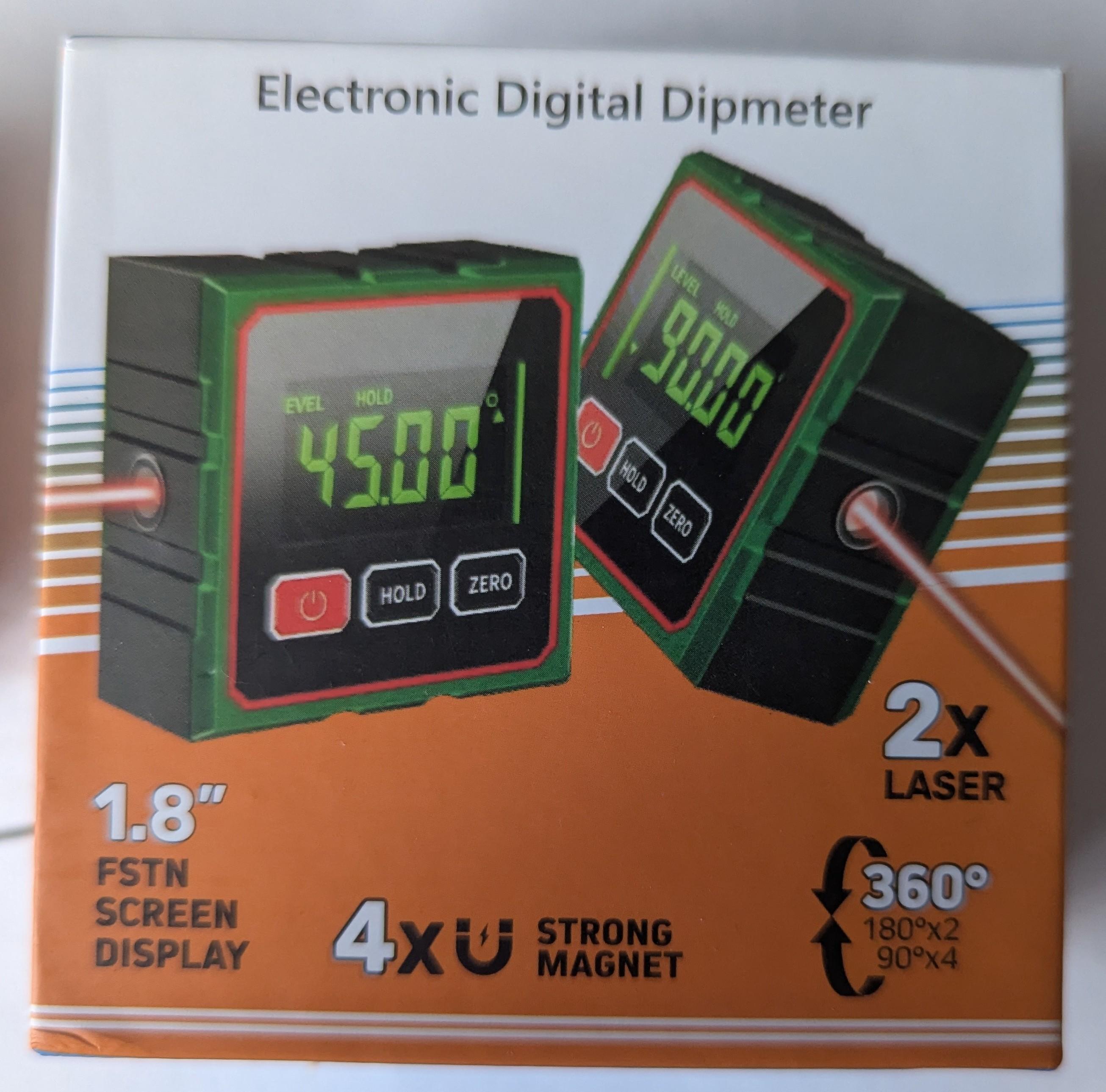
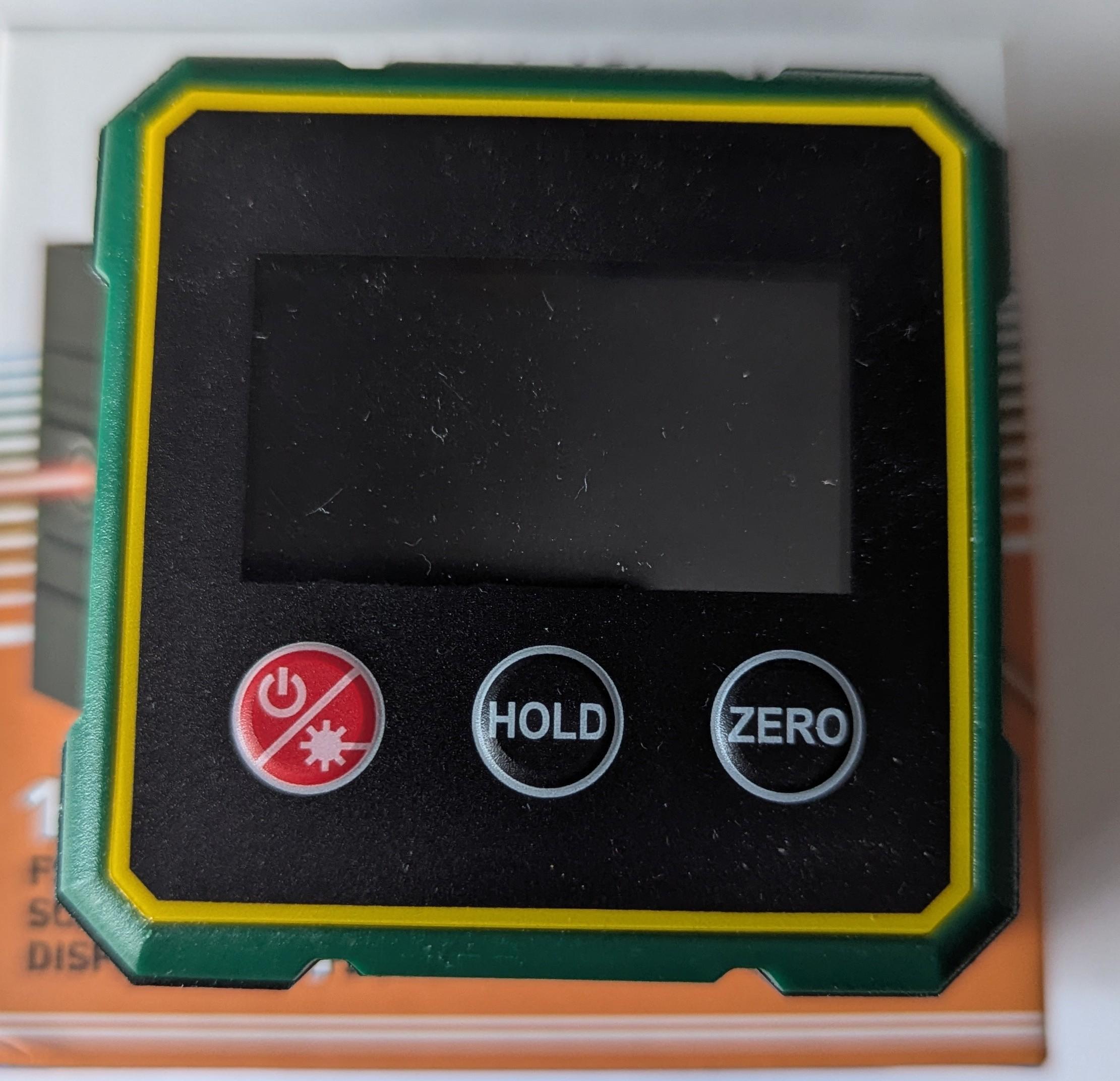
The device looks fine, but the feel is very plastic, and the strong magnets described on the box can barely support the device’s weight. It does charge over USB-C, but there’s no power-delivery chip inside, nor any resistors I can detect to set the charge current. Plug it into a standard 5V USB power supply and wait for it to charge.
Powering it on
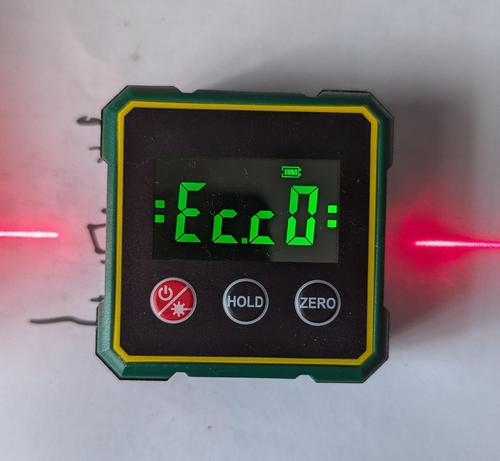
The power button is shared with the laser power. It takes a few seconds to switch the device on by holding the power button down; holding it slightly too long also turns on both lasers. Pressing the power button again cycles through the lasers. Being able to accidentally switch on both lasers seems like a massive flaw. The lasers are supposedly < 5 mW, but I can’t easily verify.
Testing
I have an old machinist 90-degree angle plate; it has five surfaces, each at a right-angle to three other surfaces. It is very accurately made.
I placed the protractor on the top surface of the angle plate, then used the relative measurement mode to zero out the slight gradient on my bench level.
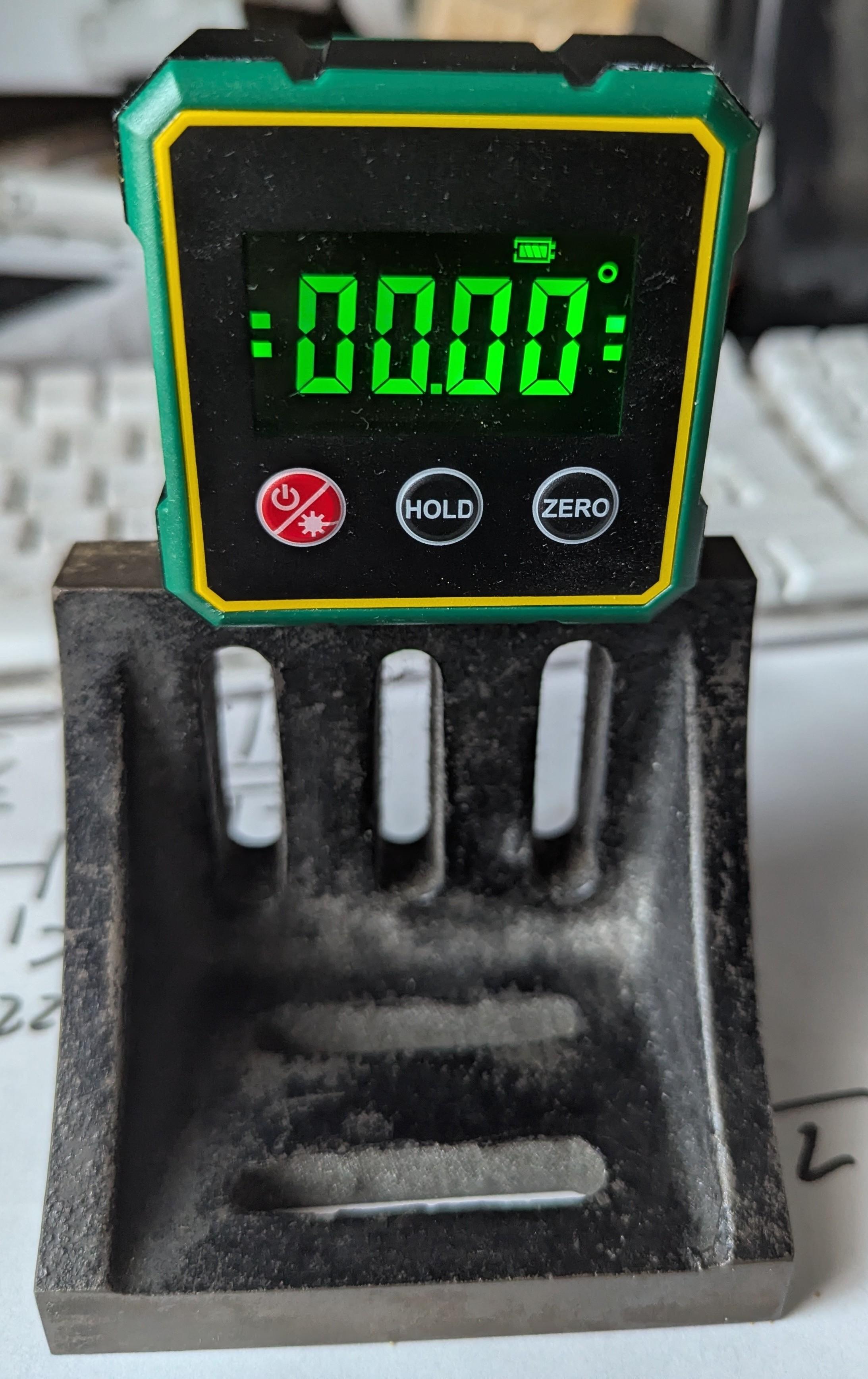
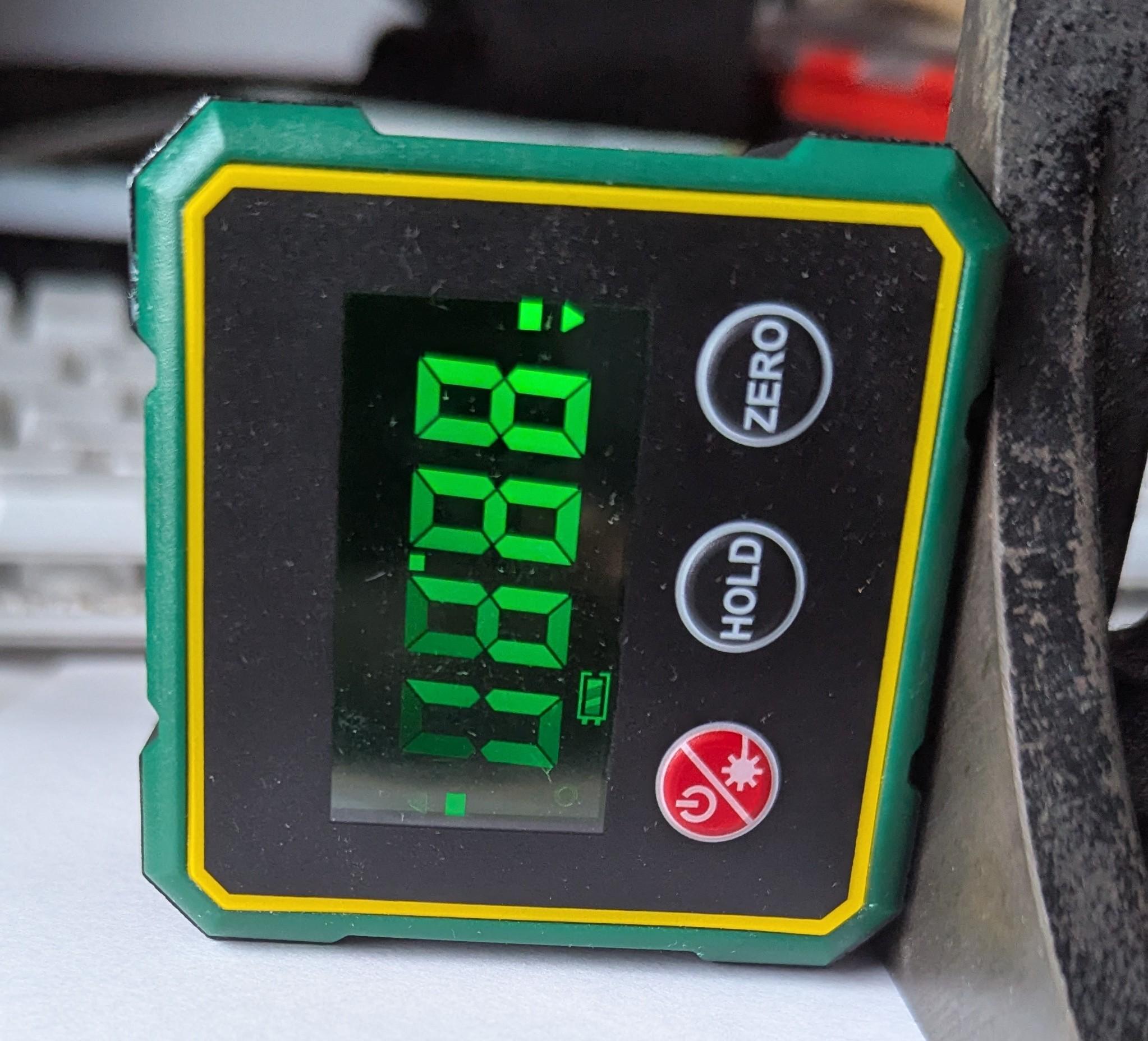
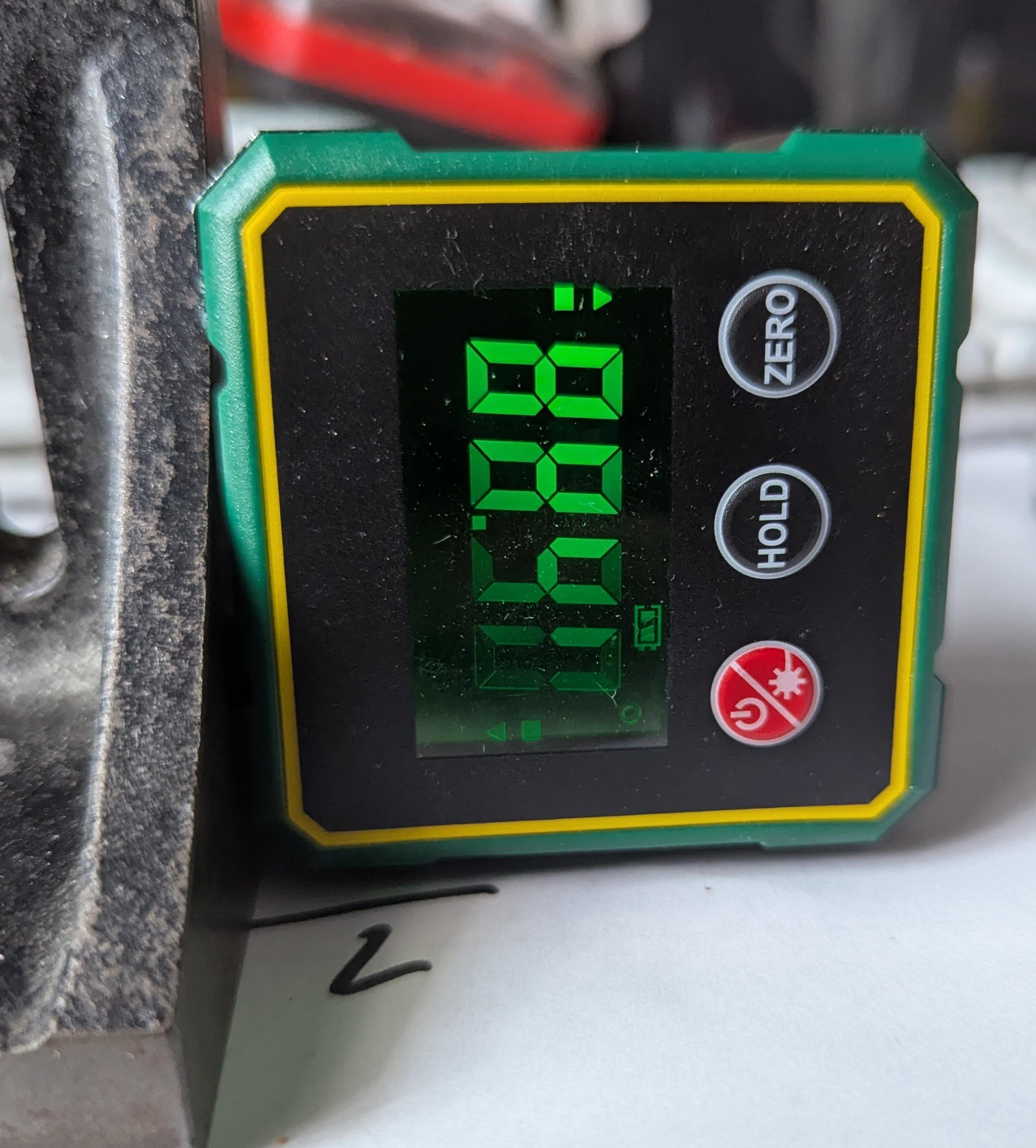
It may be hard to see in the image, due to the strobe effect on the display being blurred in the camera, but on the left side of the plate the display reads 88.0 degrees, and on the right side, 88.4 degrees. The protractor claims 0.2-degree accuracy; even accounting for this, we still have about a 1-degree error on a known 90-degree angle.
Checking laser accuracy
To be useful for projecting a level surface onto a distant point with laser light, the lasers need to be co-planar with the protractor’s reference surface and co-axial with each other.
To estimate how useful the lasers would be, I turned on both and rotated the protractor around its centre. If the surface the protractor is sitting on isn’t level, the lasers should still project to the same point when the protractor is rotated, as long as it doesn’t move significantly.
I projected the laser spot onto a wall 170cm distant, marked the spot, rotated the protractor, and marked the new spot. I did this three times. The three spots from laser-1 overlapped, and the three spots from laser-2 overlapped. There was a 23 mm height difference between the spots from the two lasers; this corresponds to nearly 0.8 degrees of misalignment, or 40mm over a 3 m distance. This is clearly too much to be useful if you’re trying to level items across a room or further.
Conclusion
For £7.50, I wasn’t expecting a metrology-class instrument, but I’d expect it to at least agree on a right angle to within its stated accuracy. The laser level projection would have been nice if it worked, but instead the lasers are a hazard and inaccurate.
The device is probably good enough to level up a bandsaw or scroll saw bed, where the blade will likely be out anyway. For levelling a floor, shelf, or similar surface, I’d avoid this device.