Investigating the yellow pigment in the lichen Xanthoria parietina
Introduction
I was probably about six years old when I first took serious notice of the lichens growing on the walls on my way to school. I asked someone, probably a teacher, what they were, then promptly lost interest until a few years later, when I discovered the joy of encyclopaedias; it was in the Encyclopaedia Britannica that I learned lichens were colonies of algae and bacteria/fungi, and some partially dissolve the surface they are on for nutrients.
I’ve maintained an interest over the years, and I’m always happy to spot a new type I haven’t seen before, or to see really shaggy lichen dangling from trees where the air is very clean. Recently, I saw a particularly large grouping of bright yellow flat lichen atop a wall at work. I realised I didn’t know which pigment made it so yellow, and pondered how I might extract and analyse some of it to determine its identity.
A couple of months in the laboratory can frequently save a couple of hours in the library. - Frank Westheimer (1912-2007)
While the above is one of my favourite quotations, I decided not to follow its advice and instead spent a few minutes online, and found out more than I’d ever need to know about the pigment and the species of lichen (Xanthoria parietina). The British Lichen Society website is a great resource.
The Pigment
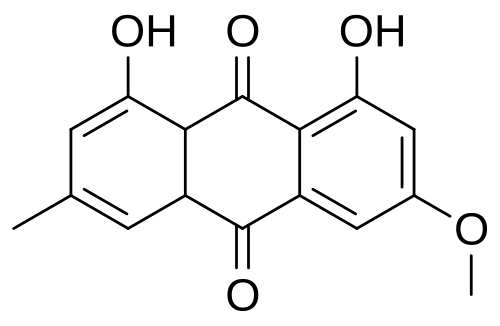
The pigment is an anthraquinone called Parietin.
With the pigment identified, I didn’t need to resort to any micro-chemical analysis. One of the lichen society identification guides mentioned that a drop of potassium hydroxide solution would stain lichens containing parietin bright crimson. I took a small sample from the lichen, just a couple of mm (lichens are slow growing, 2mm/year isn’t unheard of), so I minimised the amount I sampled.
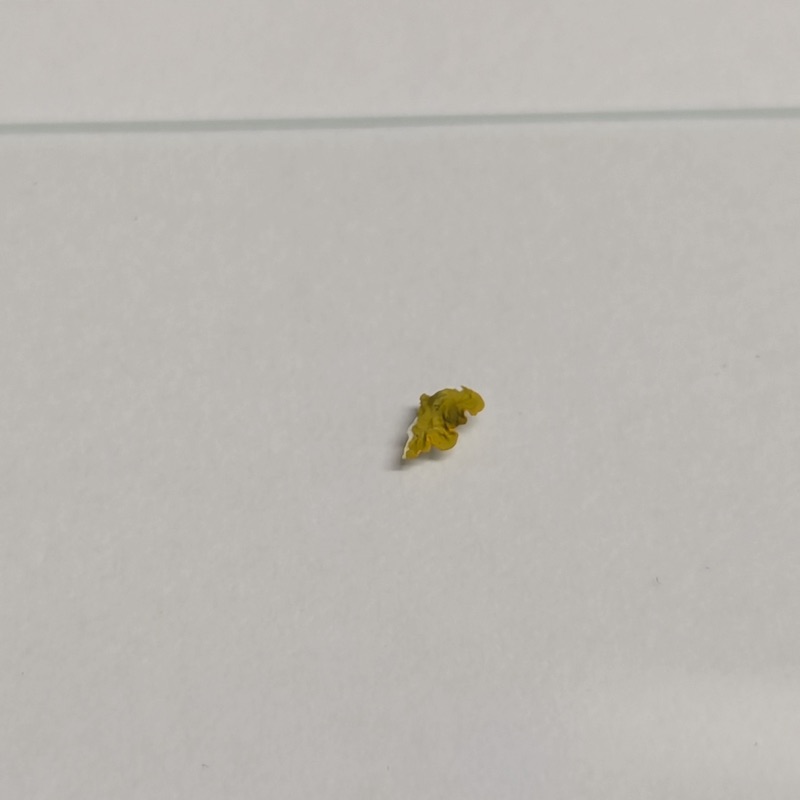
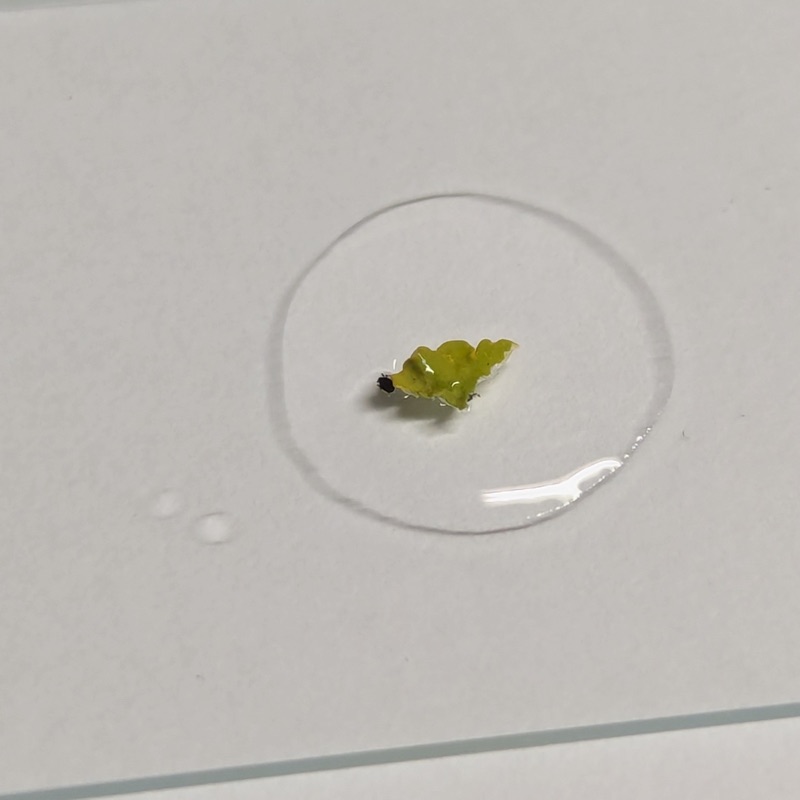
I added a drop of water to the lichen in the hope of extracting some of the parietin into it. I let this sit for a few minutes before adding a single prill of potassium hydroxide.
Over the next few minutes, the KOH reacted with parietin extracted into the water and with that remaining in the lichen, turning it deep red.
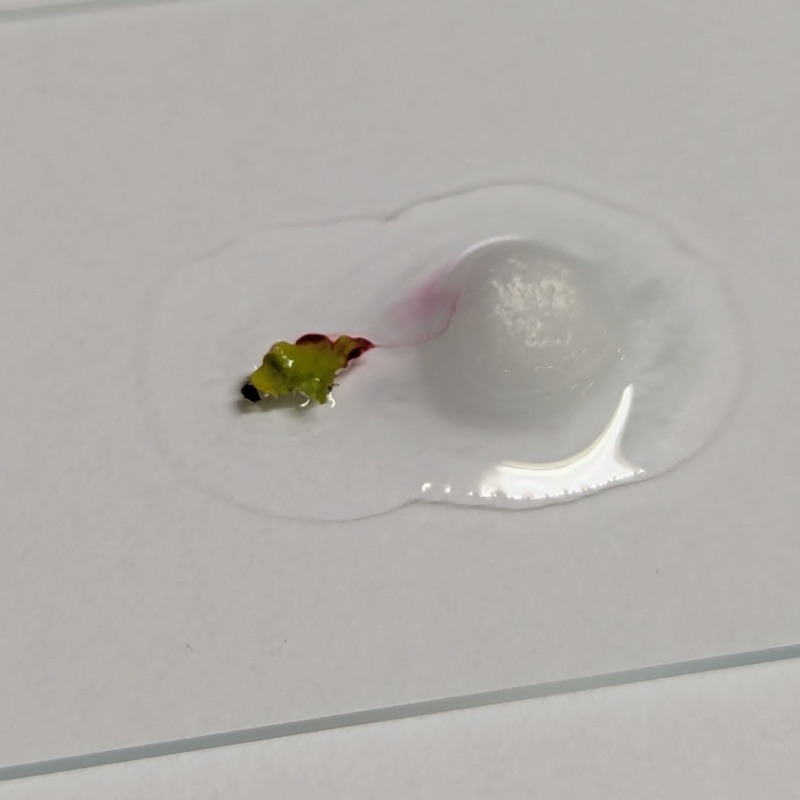
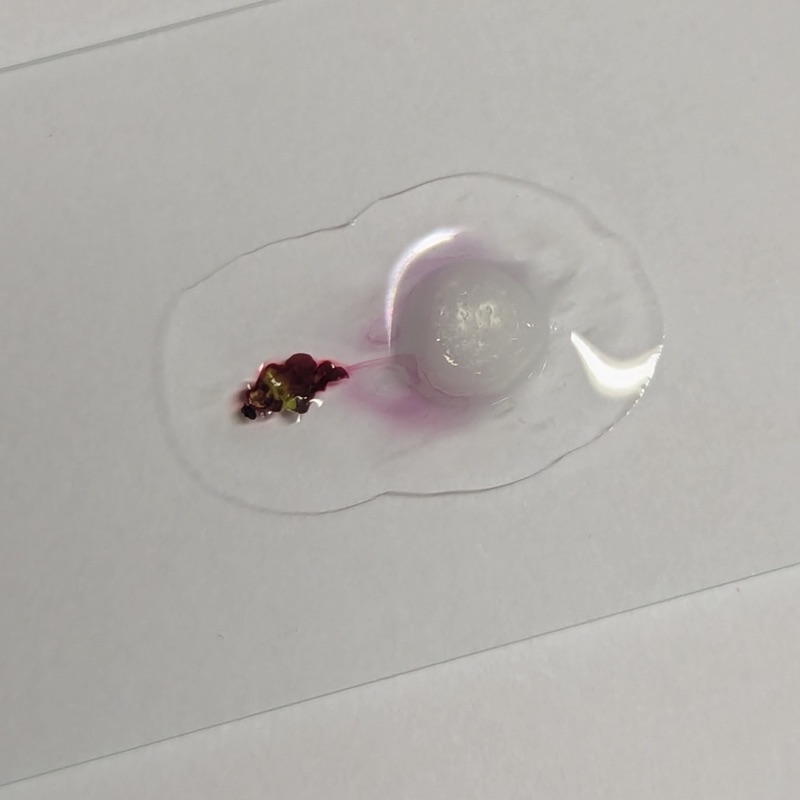
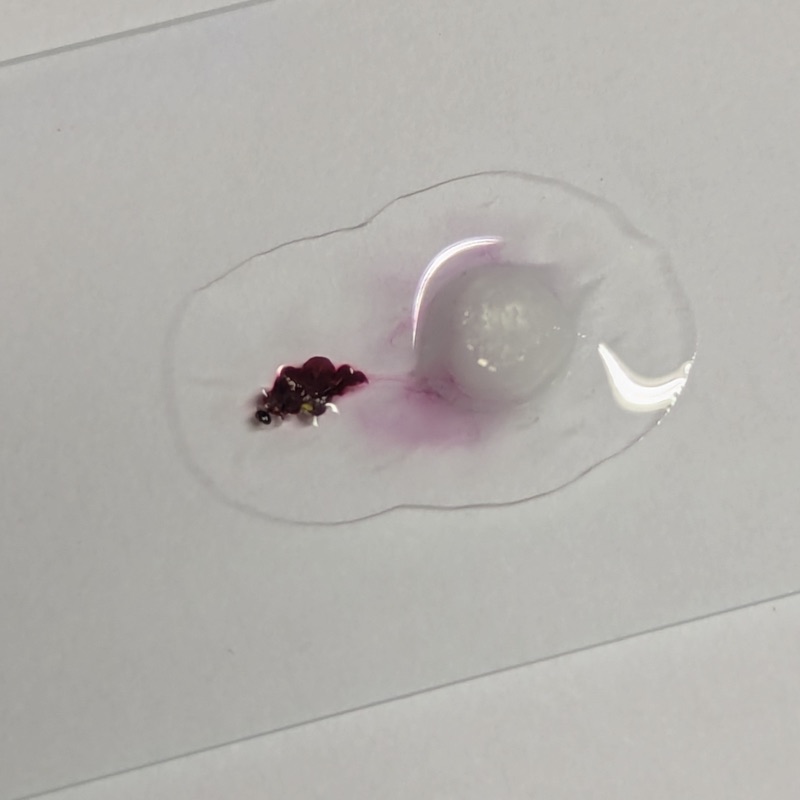
Some of the parietin did extract into the water, as a red colour was observed around the KOH, and tendrils of colour were visible between the lichen cut surface and the KOH.
As a demonstration that this wasn’t just some odd pH colour effect with any yellow pigment, I tried the same experiment with a section of a daffodil flower - no colour change was seen.
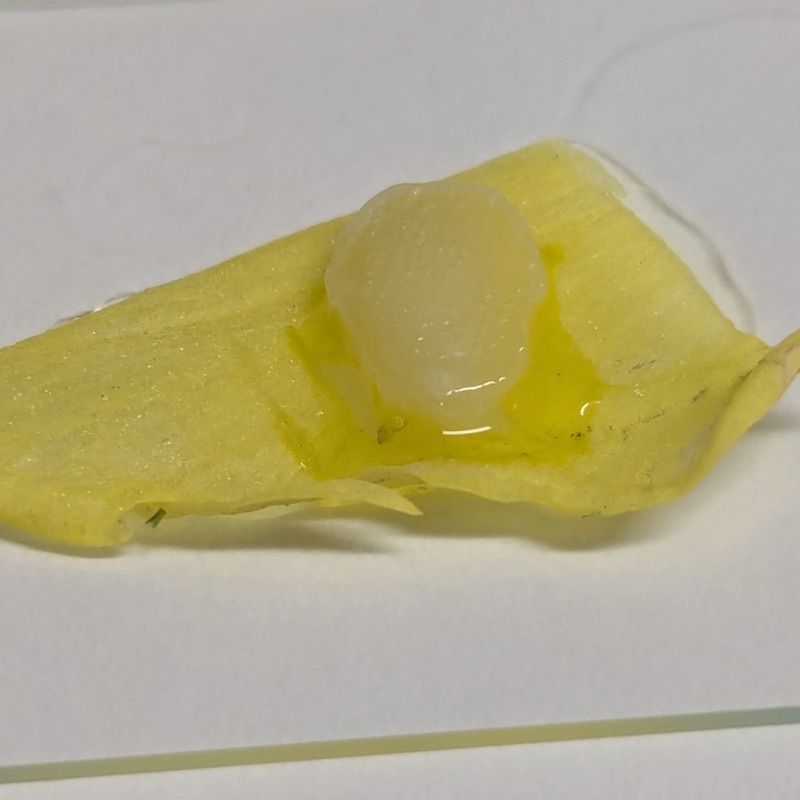
Daffodils have an entirely different pigment, carotenoids, in their flowers.